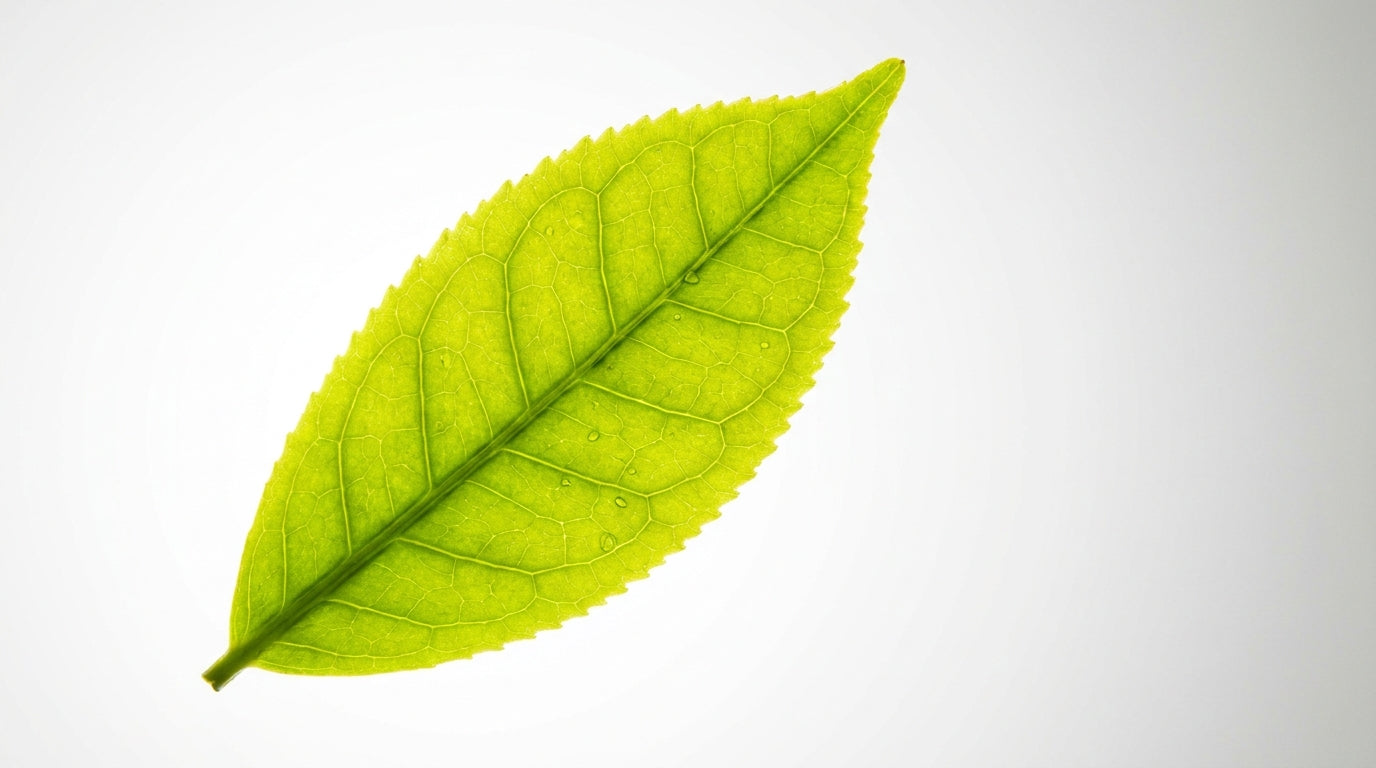
The science of the leaf

Engineered by altitude. Preserved by craft.

What follows is the evidence behind how Cloudline is grown and why the leaf behaves the way it does in the body. Every claim here is sourced.

Caffeine × L-theanine

01

Why tea caffeine feels different.

Caffeine alone is a blunt tool — it raises alertness by blocking adenosine, but without a counterweight you get restlessness, shaky hands, and an eventual crash.

Tea contains L-theanine, an amino acid that promotes alpha-wave brain activity and reduces the sympathetic-nervous-system response to caffeine. Drink them together — as you do with whole-leaf tea — and attention goes up while anxiety does not.

Haskell et al. (2008) showed the combination improved reaction time and accuracy on attention tasks within 60–90 minutes of ingestion, beyond caffeine alone.

~2:1 Caffeine : L-theanine ratio in first-flush oolong

Polyphenols

02

The leaf's stress molecules become yours.

Polyphenols — catechins and thearubigins — are what the tea plant makes under environmental stress at altitude. When ingested, they behave as mild metabolic signaling molecules: they support aerobic fat oxidation, blunt oxidative damage from hard training, and help the gut microbiome stay resilient.

Jówko (2015) reviewed green and oolong tea polyphenol intake across athletic populations and found consistent improvements in fat use during Zone 2–3 endurance work.

Z2–3 Training zones where polyphenol effect shows up

Altitude

03

Why high-mountain tea chemistry holds together.

Cool nights, strong diurnal temperature swings, and higher UV at 1,600 m change what the leaf produces. Polyphenol density rises. Amino acid profile is cleaner. Caffeine stays bound to polyphenols — the slow-release mechanism that gives tea its steady pharmacokinetic curve.

The same stress that slows down growth concentrates the chemistry.

1,600 m Alishan growing elevation

Whole leaf

04

Broken leaves lose what makes tea, tea.

Industrial tea is cut and crushed to maximize surface area for fast steeping in bags. That process exposes the leaf to oxidation, breaks the polyphenol-caffeine bonds, and produces the thin, astringent bitterness most people recognize as "tea."

A whole leaf — kept intact from pick to cup — releases its chemistry gradually over multiple brews. That's the difference between a sharp edge and a long, steady line.

3–7× Infusions from a single leaf